

urfea.over-blog.com/
24 Janvier 2021

Today, we're excited to announce that Windows Virtual Desktop is now generally available worldwide. Windows Virtual Desktop is the only service that delivers simplified management, a multi-session Windows 10 experience, optimizations for Office 365 ProPlus, and support for Windows Server Remote Desktop Services (RDS) desktops and apps. With Windows Virtual Desktop, you can deploy and scale your Windows desktops and apps on Azure in minutes.
Since we announced Windows Virtual Desktop last September, and through the public preview announced in March, thousands of customers have piloted the service and taken advantage of the Windows 10 multi-session capability—validating the importance of this feature as a core part of the service. Customers also represented, all major industries and geographies, helping us get feedback from different customer types and locations. As a result, as of today the service is now available in all geographies. In addition, the Windows Virtual Desktop client is available across Windows, Android, Mac, iOS, and HTML 5.
'Windows Virtual Desktop allows our employees to work in a secure manner wherever they are. Windows Virtual Desktop provides the Windows 10 desktop experience that our employees are familiar with across a variety of devices or web browsers.'
—Jake Hovermale, Chief Technical Officer, BEI Networks
With the end of extended support for Windows 7 coming in January 2020, we also understand some customers need to continue to support Windows 7 legacy applications as they migrate to Windows 10. To support this need, you can use Windows Virtual Desktop to virtualize Windows 7 desktops with free Extended Security Updates (ESU) until January 2023. If you're in the process of migrating to Windows 10 and need app compatibility assistance, read more about how we can help with the Desktop App Assure program.
To help increase productivity, we invested heavily in the Office experience in a virtualized environment with native improvements, as well as through the acquisition of FSLogix. In July, we made the FSLogix technology available to Microsoft 365, Windows 10 Enterprise, and RDS customers. Today, all FSLogix tools are fully integrated into Windows Virtual Desktop, enabling you to have the smoothest, most performant Office virtualization experience available today.
In addition to the significant architectural improvements for deployment and management, we're also simplifying app delivery by supporting MSIX packaged apps to be dynamically 'attached' to a virtual machine instead of installing it permanently. This is important because it significantly decreases storage and makes it easier for the admin to manage and update the apps, while creating a seamless experience for the user.
Check out the new video from Scott Manchester, Principal Engineering Lead for Windows Virtual Desktop, where he does a great job of walking you through the app 'attach' experience. https://svai.over-blog.com/2021/01/grandtotal-4-2-4-download-free.html.
The virtual machine runs in its own window on the Mac desktop, and can then run your Windows apps on screen at the same time as conventional 'native' Mac apps, such as Apple Mail and Safari. Yes but you need a VR ready PC running Windows 10 (it won't work through on a Mac). You need to patch Virtual Desktop after purchasing the app in the Oculus Store. This can be done easily by using SideQuest. Follow the instructions in SideQuest to enable developer mode then click 'Install to Headset' in the Virtual Desktop page in SideQuest.
Windows Virtual Desktop is now released and ready for production!
Watch the videoWe also worked closely with our partner ecosystem to help our customers extend Windows Virtual Desktop and get the most out of existing virtualization investments.
General availability of Windows Virtual Desktop is just the beginning. We'll continue to rapidly innovate and invest in desktop and app virtualization. We look forward to sharing more with you in the coming months. In the meantime, learn more on our product page and get started with Windows Virtual Desktop today.
If you're a partner and want to learn more about Windows Virtual Desktop, visit the Azure Partner Zone page for Windows Virtual Desktop.
The best virtual desktop experience, delivered on Azure.
Start freeIf you want to run Windows on your Mac there are two ways to do it. One is to partition your main drive using the built-in Bootcamp Assistant and then install Windows on the partition that doesn't house macOS. You can then boot into whichever operating system you choose.
While that method means running Windows natively and so is optimal in terms of performance, it means you have to reboot every time you want to move between operating systems and you can't, for example, copy and paste between macOS and Windows. If you want to run Windows and macOS side by side, you'll need to create a Windows virtual machine for Mac.
A virtual machine (VM) is a computer that's created in software and looks and feels just like a real PC. But it runs inside a Mac application. The whole virtual machine, with the operating system and all its applications, is stored inside one big file on your Mac. That means you can have multiple virtual machines on the same Mac. Once you launch it and ‘boot' the virtual PC, Windows VM on Mac behaves like any other Windows machine, except that it's running inside a window on your Mac.
If you have two screens connected to your Mac, you can have macOS on one and Windows on the other. Or you can use Mission Control to swipe between them. A virtual machine can share accessories like printers and external storage with your Mac, and you can copy and paste between the two operating systems. https://hereyup916.weebly.com/jump-desktop-7-1-2-remote-desktop-utility-software.html. You can even set up the virtual machine to use Mac keyboard shortcuts instead of their Windows equivalents.
As long as your Mac has an Intel processor (and it will have unless it's more than 12 years old), in theory it can run a virtual machine. However, running a virtual machine alongside macOS needs lots of memory (at least 8GB in total, and more if you want to run more than one virtual machine) and at least two processor cores. You'll also need at least 16-20GB of hard drive space, and that's before you start installing applications and saving files. Most modern Macs should run any of the virtual machine applications described here without a problem.
The other thing you'll need is a copy of Windows. Virtual machine applications don't come with Windows installers, so you'll need to supply your own, along with a licence key.
There are three contenders here: Parallels Desktop, VMWare Fusion, and VirtualBox. We'll discuss Virtual Box in the next section.
The latest version of Parallels Desktop has support for features in the latest Macs, like the MacBook Pro's Touch Bar. It also allows you to make the Windows desktop ‘invisible' when you're running apps, so it looks like you're just running Windows apps in macOS. Or, if you prefer, you can shrink Windows desktop down to a thumbnail preview, so it doesn't get in the way but you can keep an eye on what it's doing.
Of course, virtual machines aren't just about running Windows on your Mac. Parallels Desktop allows you to install Linux, or a different version of macOS, say a beta of the next version if you don't want to install it on your Mac. If you've previously installed Windows on a Boot Camp partition, you can use that partition as a virtual machine, allowing you to boot into it from within Parallels without re-booting your Mac.
Touch Bar support includes functions in Microsoft Office apps, as well as Windows Task Bar.
When it comes to performance, Parallels Desktop is about as good as it gets for virtual machines. That means you can run most applications just fine, but demanding 3D graphics-intensive games, and other apps that place lots of demands on the CPU and GPU are still a bit of a struggle. If you want to run those in Windows, you're still better off using Boot Camp.
The other main contender when it comes to running a virtual machine on your Mac is VMWare Fusion. It comes in two versions, Fusion 10, which costs about the same as Parallels Desktop, and Fusion 10 Pro, which is more expensive but adds feature aimed at enterprise customers, such as support for managing virtual servers.
In terms of features, there's little to choose between Parallels Desktop and Fusion. Like its rival, Fusion allows you to choose between running Windows inside a window on your Mac (or full-screen if you prefer) and in what it calls Unity mode, where the operating system disappears and Windows apps look like they're running natively on the Mac. That means you can run Windows and Mac apps alongside each other and switch between them seamlessly. You can also copy and paste between Mac and Windows, share peripherals, and map Mac keyboard shortcuts in Windows.
Support for OpenGL and DX10, as well as Apple's Metal technology means that playing resource-hungry games is theoretically possible. Descargar chat gmail gratis. But, as with Parallels, performance in the latest games lags behind Boot Camp and may prove frustrating.
The latest version of Fusion adds support for the MacBook Pro's Touch Bar.
Choosing between Parallels Desktop and VMWare Fusion may be as much a matter of a preference for one or the other's user interface. They have very similar features, and cost almost the same. Fortunately, both offer free trials — Parallels for 14 days and Fusion for 30 days — so you can download each one and try them out before making a decision on which to buy.
If you want to run a virtual machine on your Mac but can't stretch to the $70 for Parallels or Fusion, there is a third option — VirtualBox. Owned by Oracle and made available as open-source software for personal or educational use, VirtualBox won't cost you a penny if you fall into either of those two categories.
That's the good news. The bad news is that VirtualBox, because it's open source and free lacks all of the polish of Parallels Desktop and VMWare Fusion. While it does the basics competently, it's much less user friendly and much less easy to use than the other two. And while there is help available online from other users, there's no official support if you run into problems. And remember, while VirtualBox itself is free, you'll still need to supply your own copy of Windows. Alternatively, you could use VirtualBox to run Linux on your Mac, instead of Windows.
As we mentioned earlier, the alternative to running a virtual machine on your Mac is to partition your main drive using the built-in Boot Camp Assistant (it's in the Utilities folder). You can then install Windows or Linux, or another version on macOS, on the other partition.
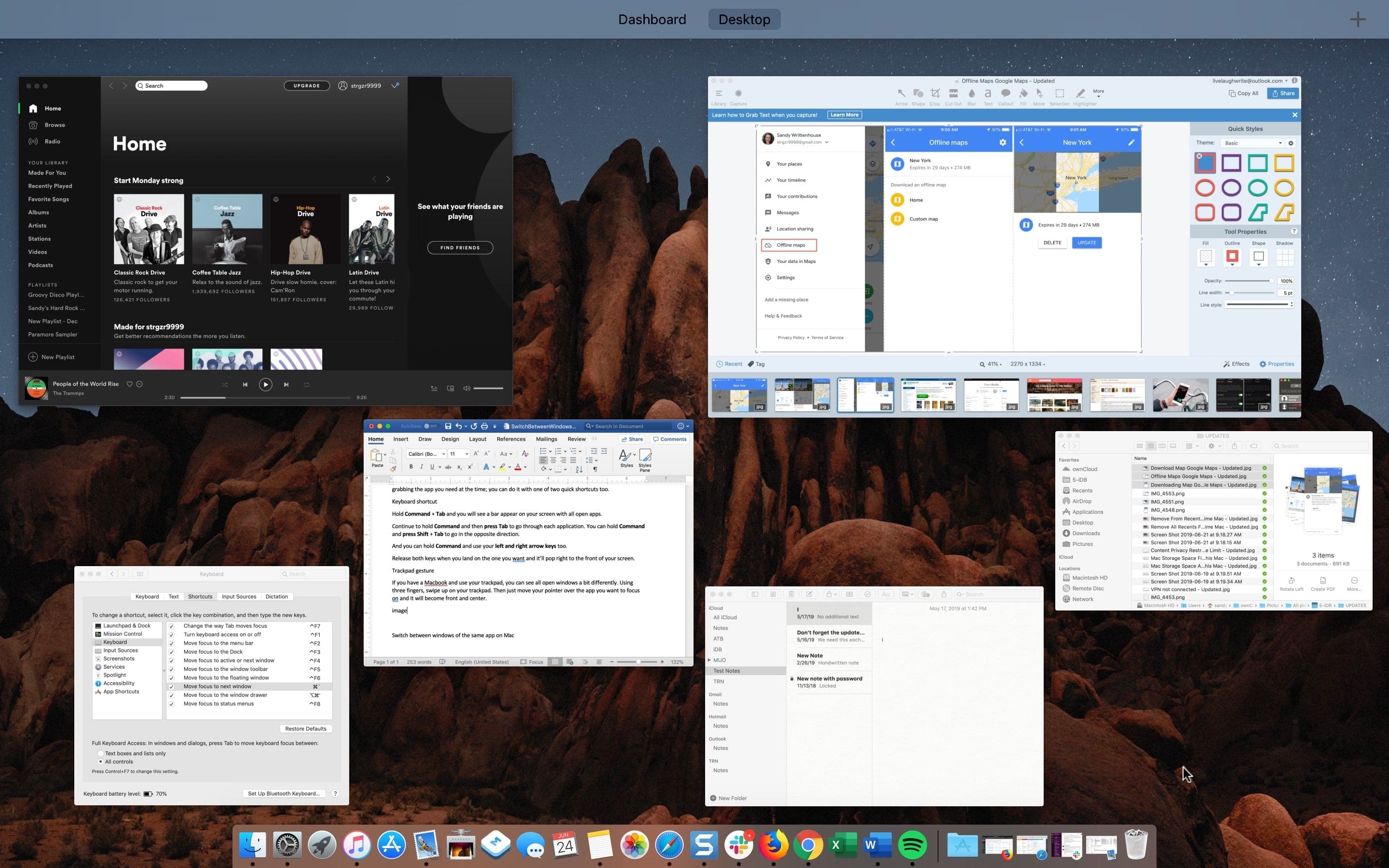
Boot Camp Assistant is very easy to use and once you've set it up, booting into, say, Windows, is just like using it natively on a PC. That means, of course, that you won't be able to copy and paste between Mac and Windows, and you won't be able to use external storage that's formatted in APFS or Mac OS Extended, but Windows will run faster than it does on a virtual machine.
If you plan to use Boot Camp Assistant to partition your main drive, remember to back it up first. Partitioning a drive is not quite major surgery, but it definitely carries the risk of losing data.
Depending on how many applications you plan to install on your virtual machine and what you plan to use it for, you may need tens of gigabytes of free space on your Mac. If space is tight, don't worry, there's plenty you can do to make room. As a first step, we recommend installing CleanMyMac X. It scans your Mac and looks for files that can be safely deleted. These include 'junk' system files like cache files and other temporary files that are still hanging around, as well as language support files, and data in Photos and iTunes you may not need. Once it's scanned your Mac and found all those files, you can delete them all with a click, or review the results of the scan and decide for yourself what you want to trash.
CleanMyMac can also uninstall files completely, getting rid of all the files that are left if you just drag and app to the Trash, and highlight large and old files that you haven't opened for a while. Best of all, you can download it free here and give it a try. You'll be surprised about how much space you can free up.
Virtual machines are the most convenient way of running a second operating system on your Mac. The ones we have highlighted here are the best VMs for Mac, so download one and give it a go.
For security reasons, ITS requires using the UI Anywhere VPN when connecting to Virtual Desktop from off campus. For instructions on downloading and installing the VPN client, see the UI Anywhere VPN support center.
To get started using the Virtual Desktop to connect to applications remotely, you'll need to install the Citrix Workspace App. This can be downloaded from the Virtual Desktop web portal in most cases. Alternately, the Citrix Workspace App can be downloaded directly from the Citrix site. For more information, see Installing the Citrix Workspace App on Windows or Mac OS.
It is also possible to 'activate' the Citrix Workspace App. This is purely optional. Activating the Citrix Workspace App provides a more integrated way to access remote applications.
Unable to install chrome on mac. Benefits of activating the Citrix Workspace App
To see instructions for how to activate the Citrix Workspace App, see this article.


/image%2F6288382%2F20210221%2Fob_8d6eb4_minecraft-mod-installer-mac-download.jpeg)
/image%2F6288382%2F20210221%2Fob_35734d_ssd-not-showing-up-on-mac.png)
/image%2F6288382%2F20210221%2Fob_72f8f7_minecraft-mac-pocket-edition.png)
/image%2F6288382%2F20210221%2Fob_e7afd5_the-sims-2-university-mac-download.png)